Merging beauty with the beast
During my college years in Limerick, I often walked along the Dock Road, drawn to the large presence of the Irish Cement factory. This huge industrial site was filled with grey silos, conveyor belts and tall chimneys sending out smoke. It felt like a humming monster rising from the ground, clanking, restless and strangely alive. With no one around, it seemed to have a life of its own. When I visited the site a while ago, I found it empty and covered in weeds. Its sharp cement edges have softened and its steel frames are marked with rust. In its quiet state, it is just as powerful as ever as it blends back into the land it once came from.
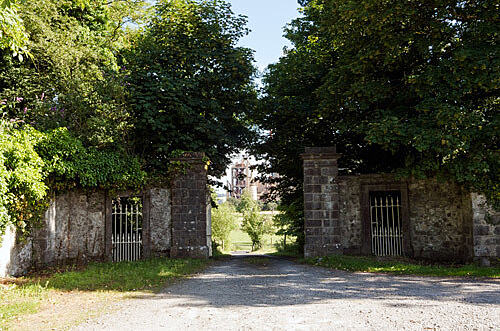
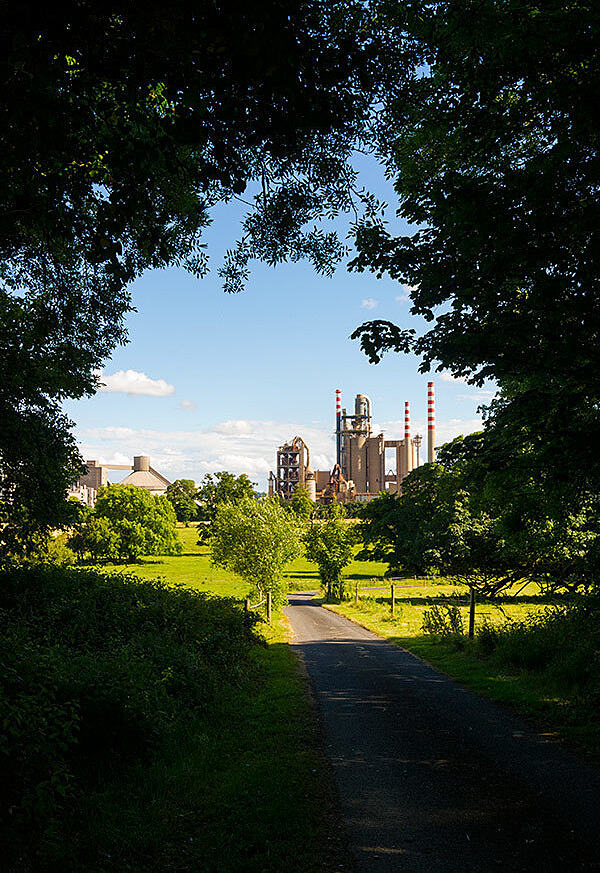
Irish Cement runs another plant in County Meath, which I pass on my way to my sister’s home. This site has a large building with a group of short, round silos which are surrounded by agricultural land. The setting feels almost unreal, an industrial site placed within such a quiet countryside. I’ve taken many photos of the place, but I’m always drawn back to one special view: the gateway framed by two stone pillars as seen below. Beyond the entrance, curved trees frame a winding road that leads to the factory far away. From here, the plant’s shape blends with the land, looking less industrial and more like a mythical place. It looks like a fairytale castle or a futuristic Emerald City, rising unexpectedly at the end of the road.
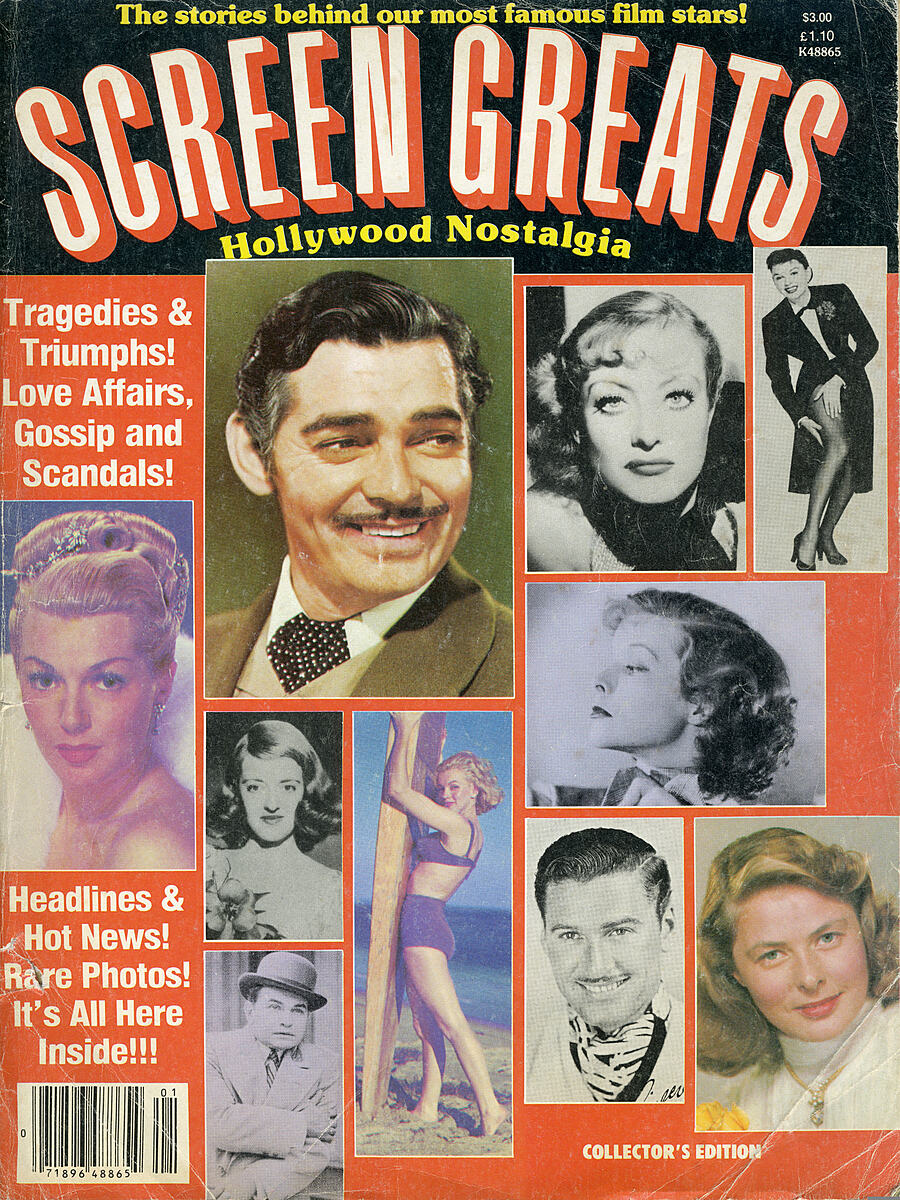
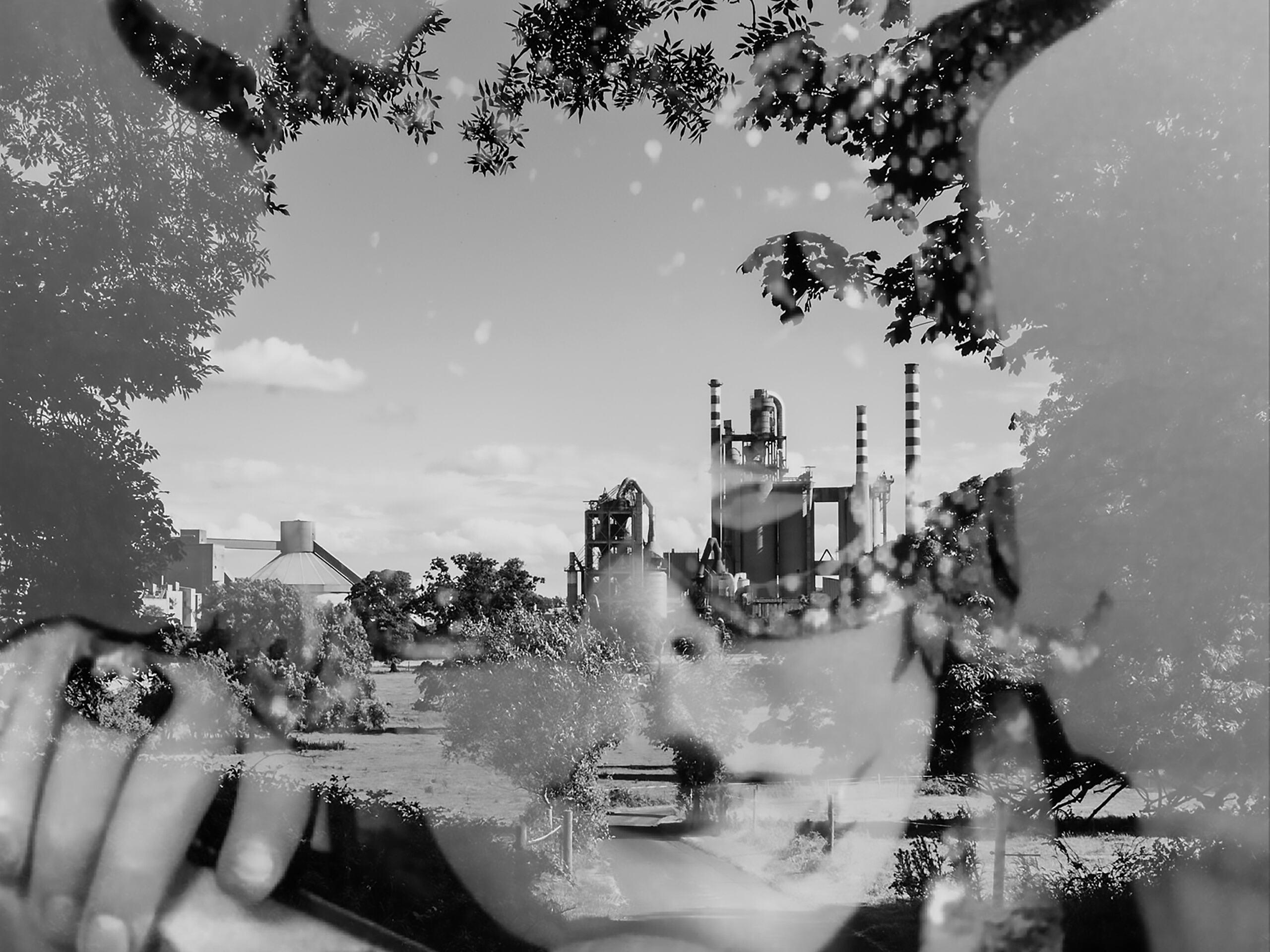
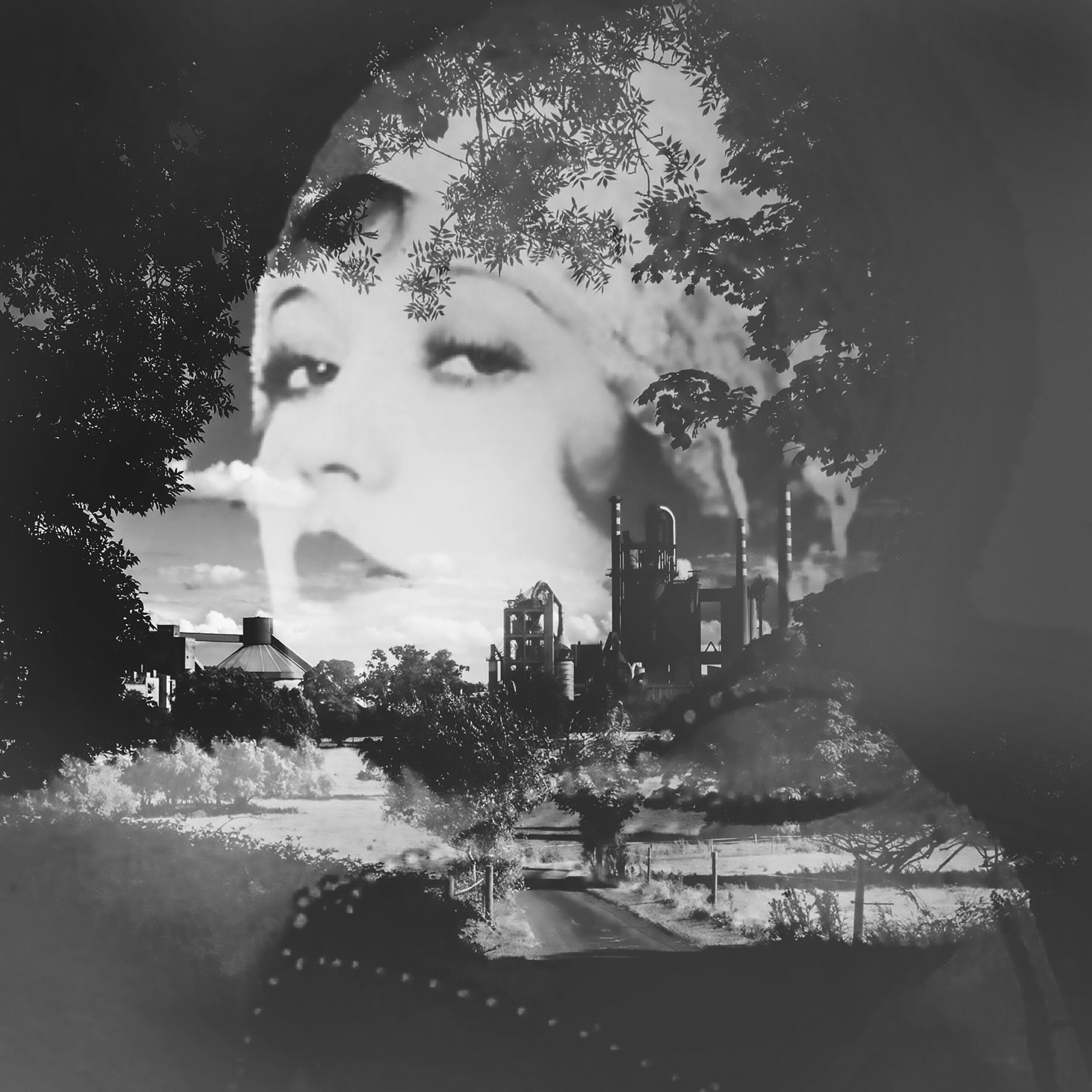
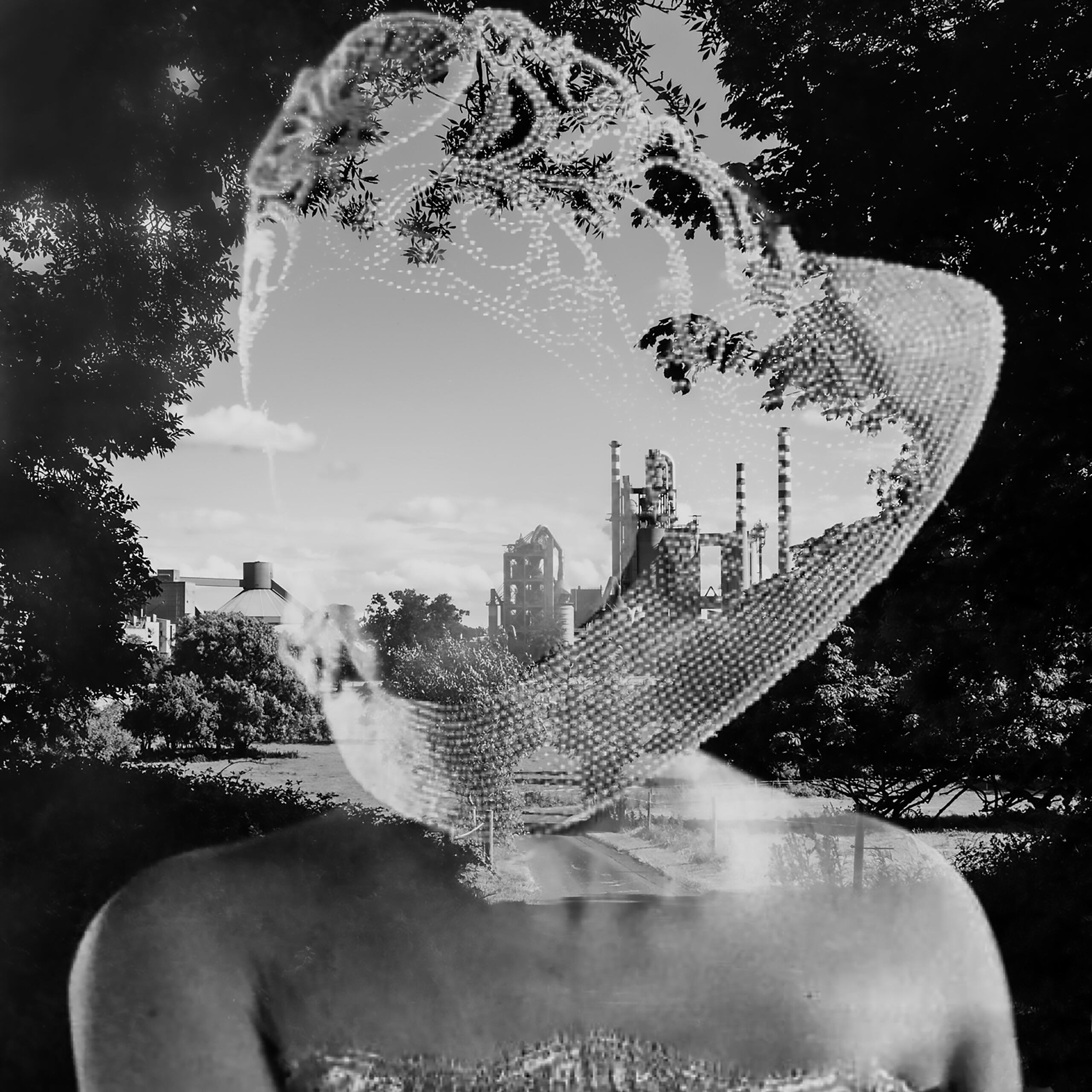
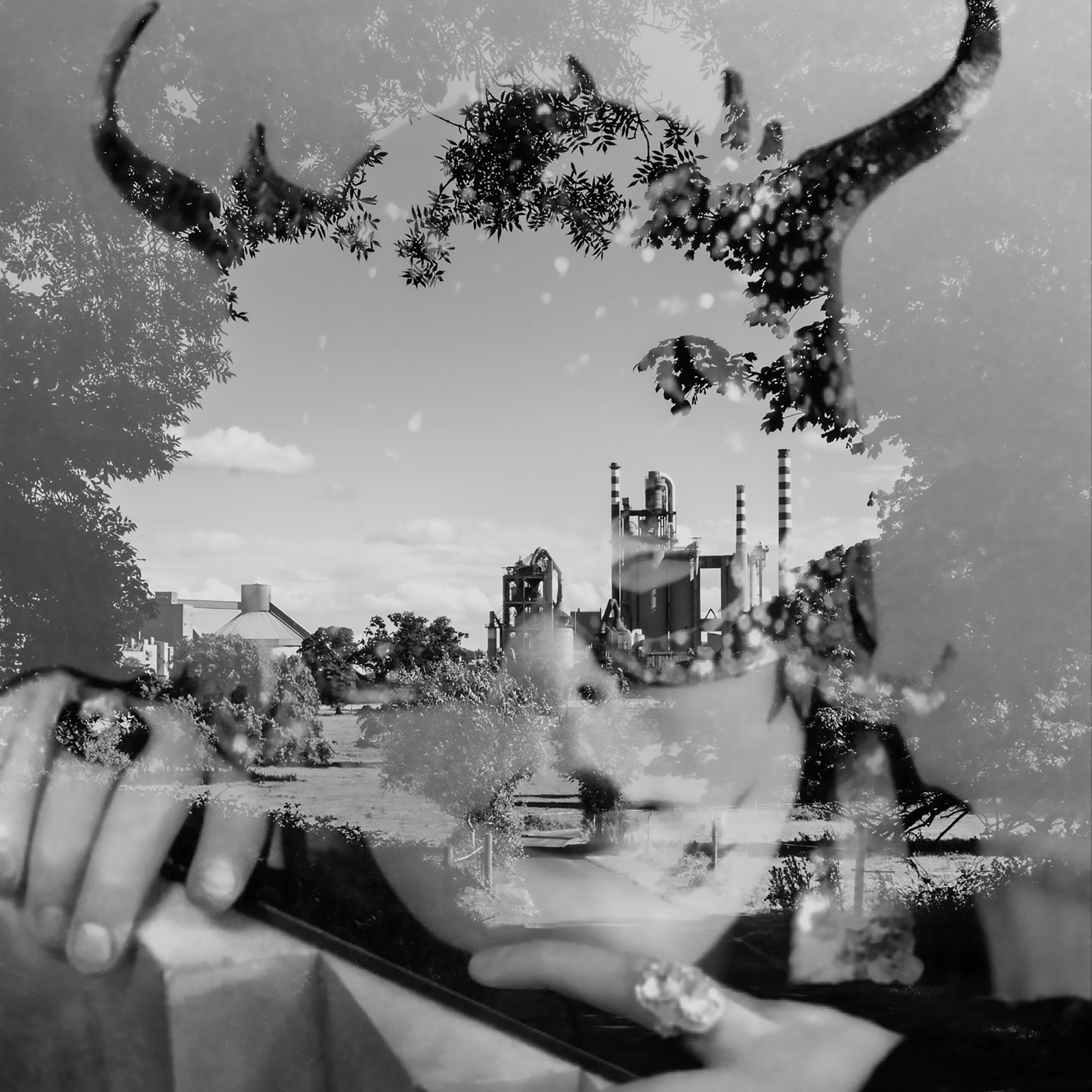
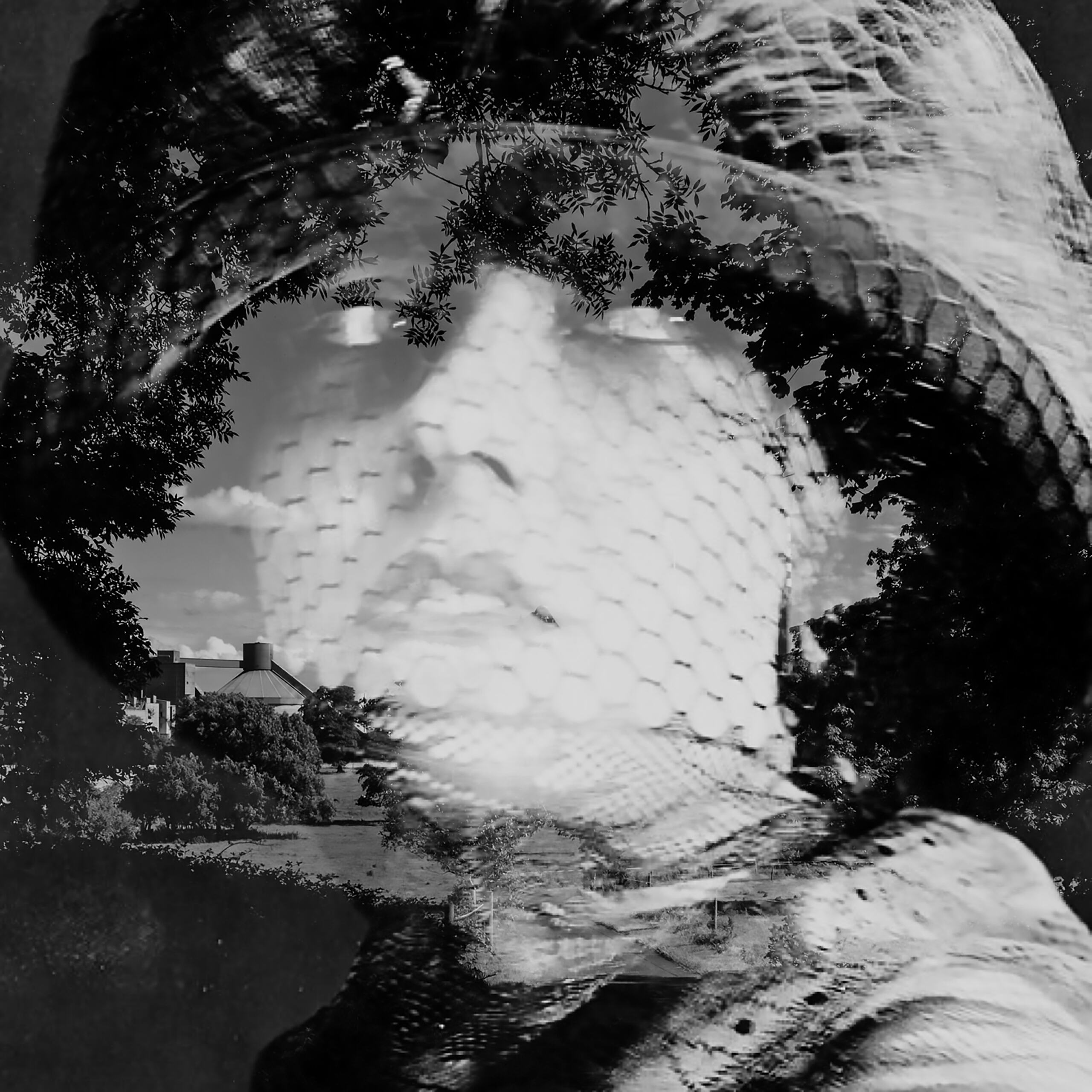
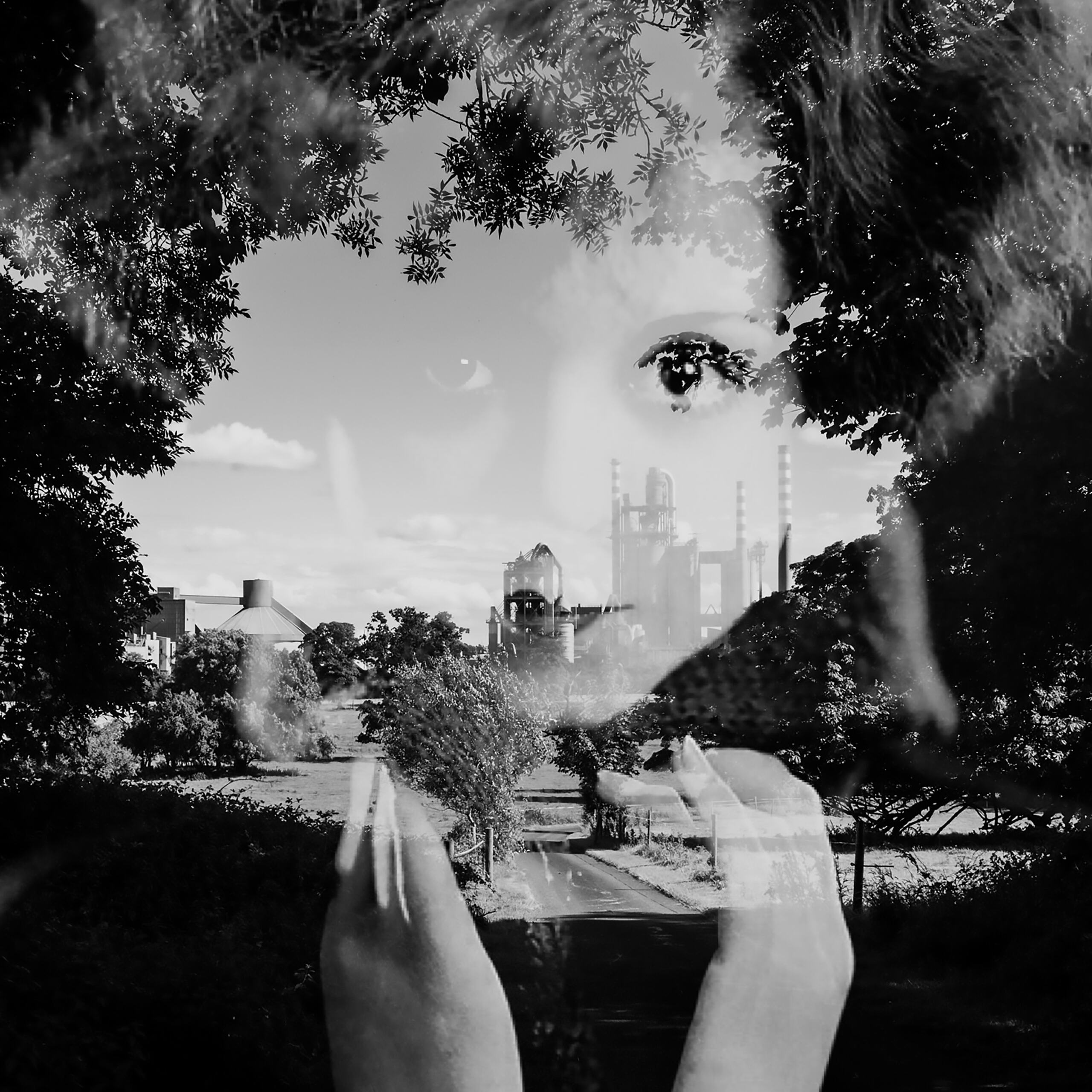
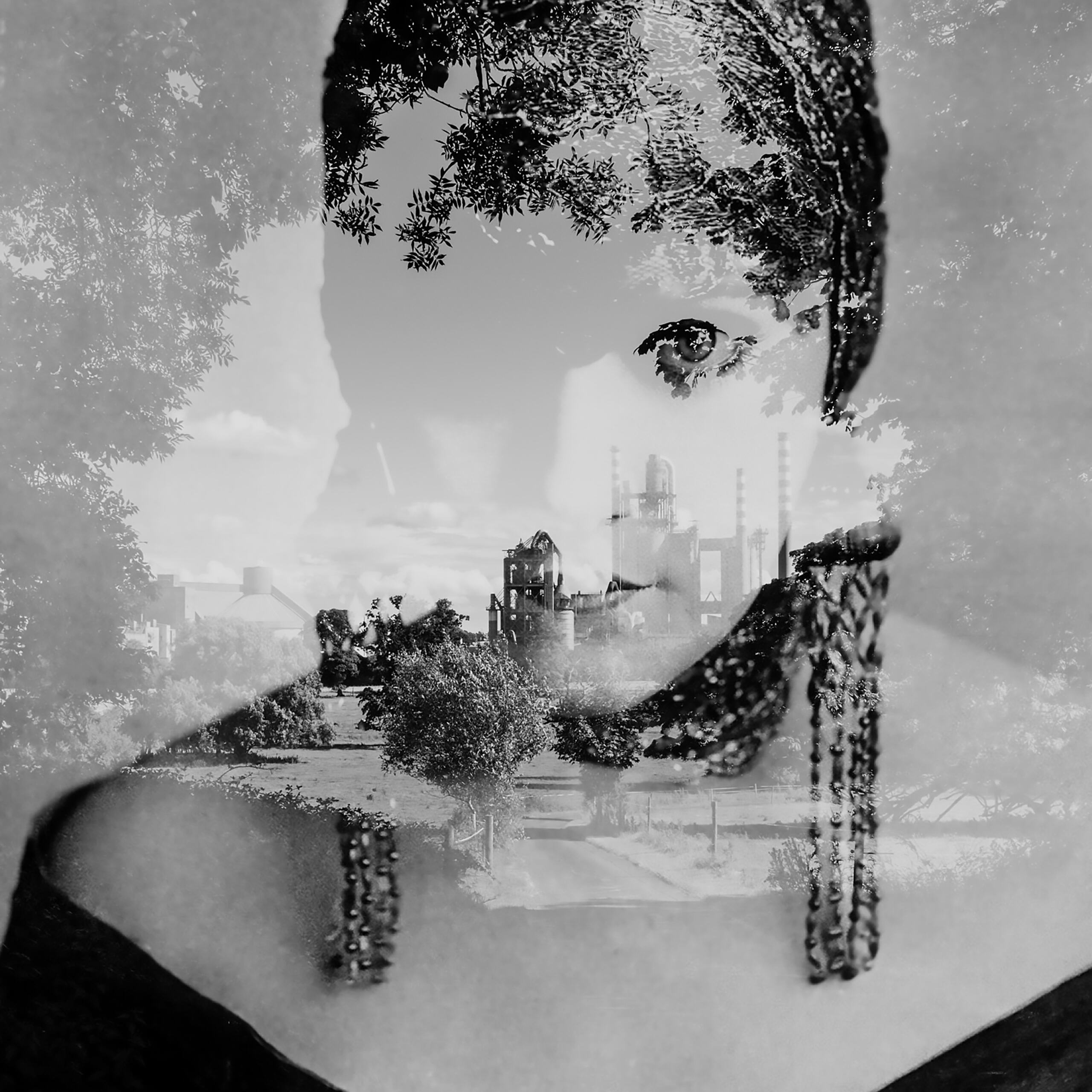
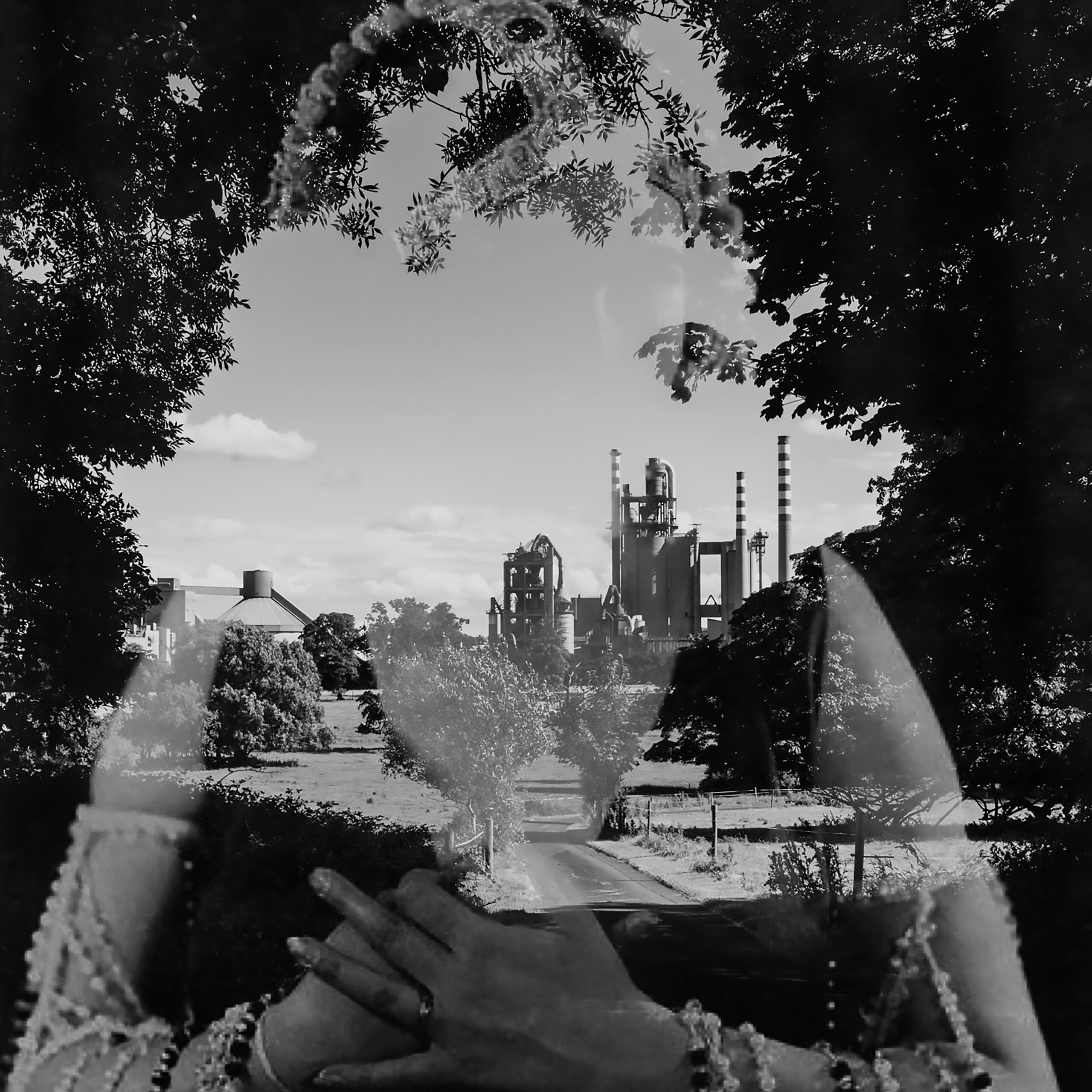
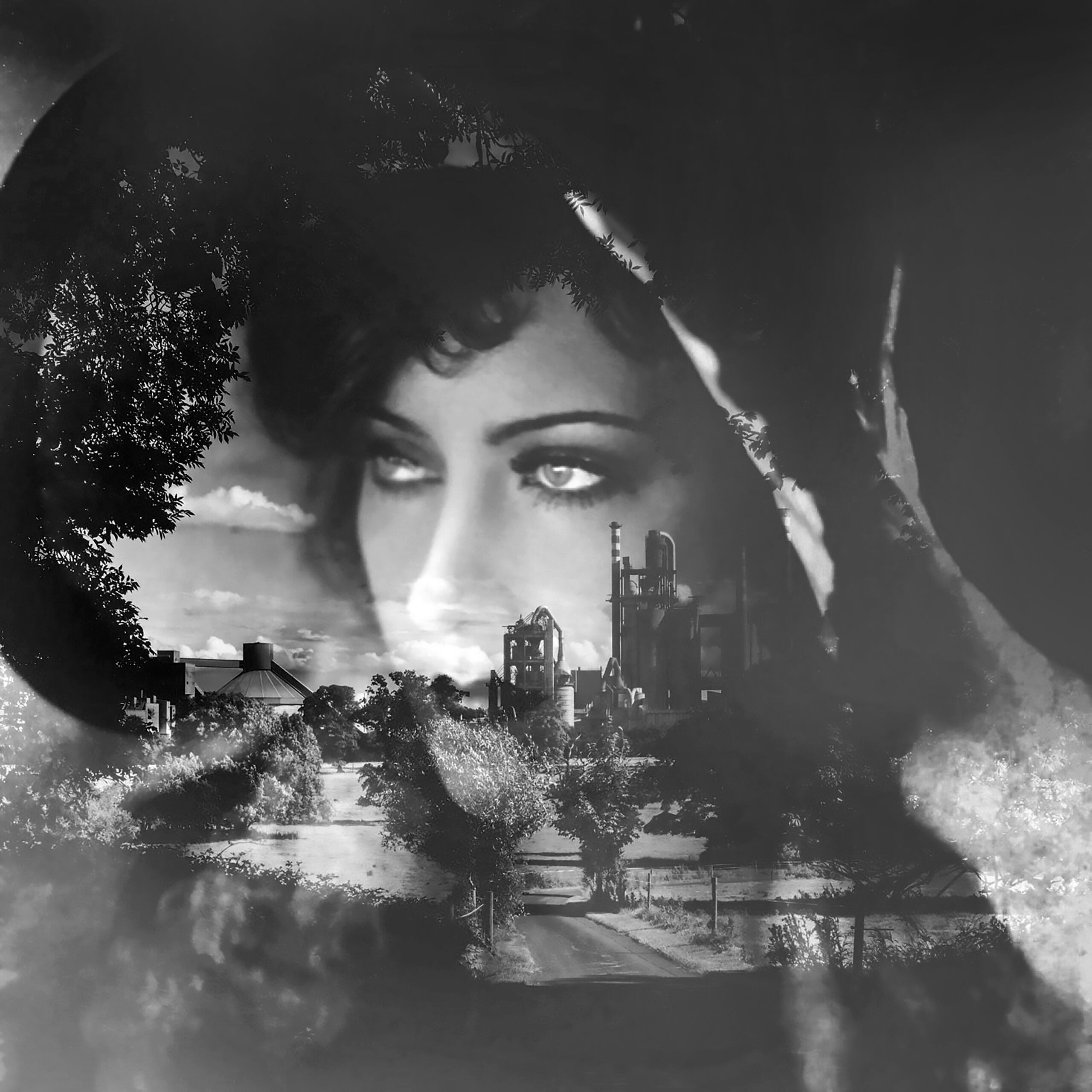
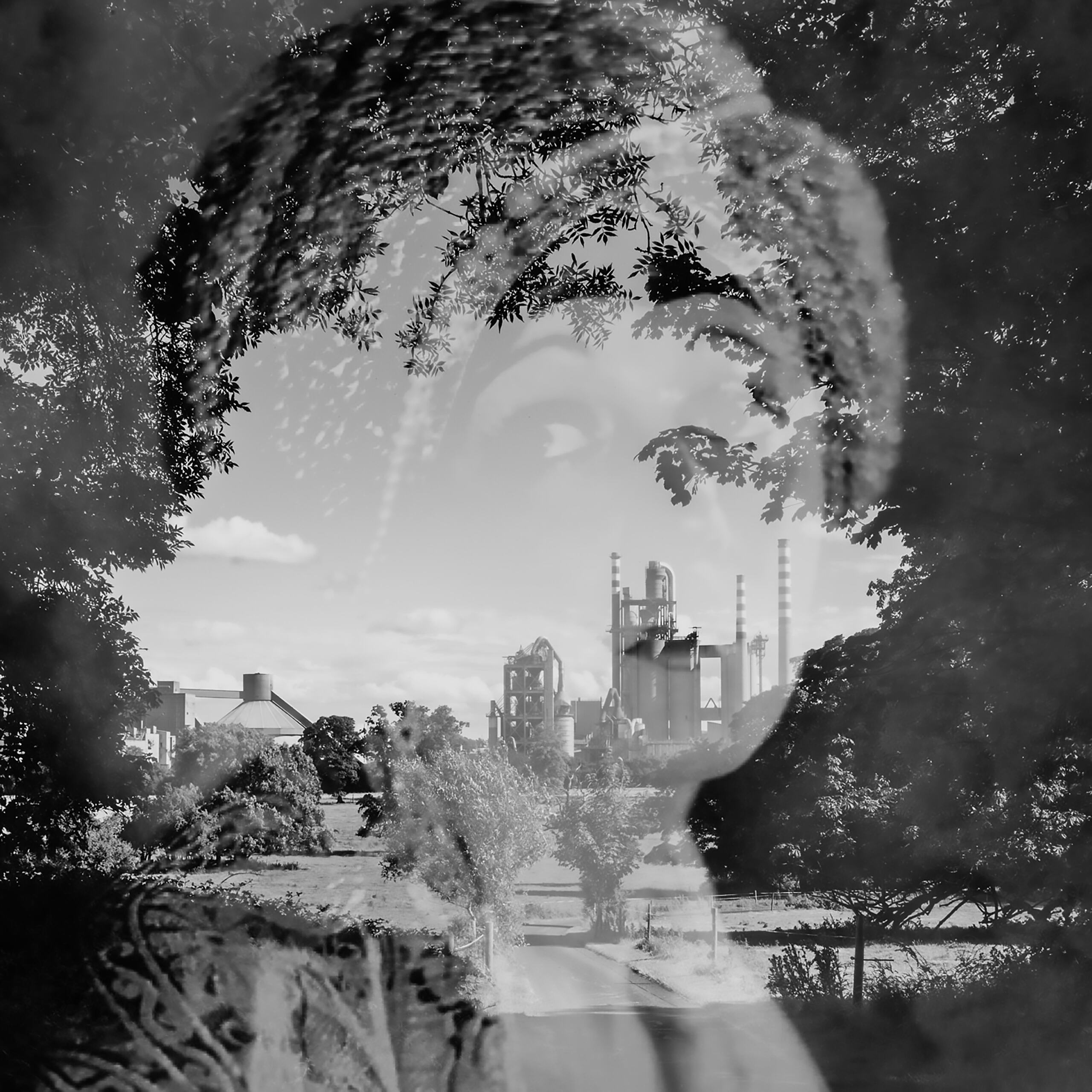
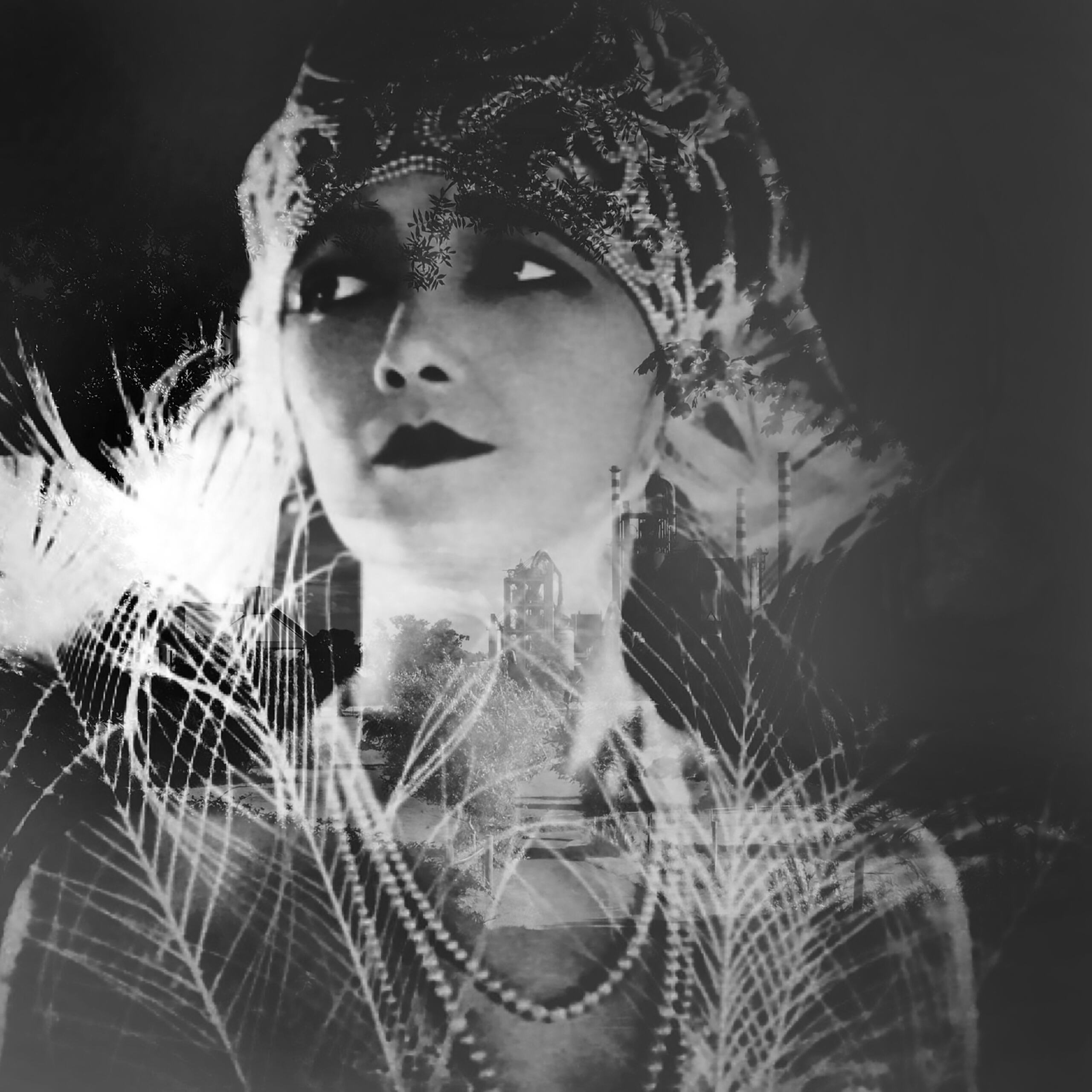
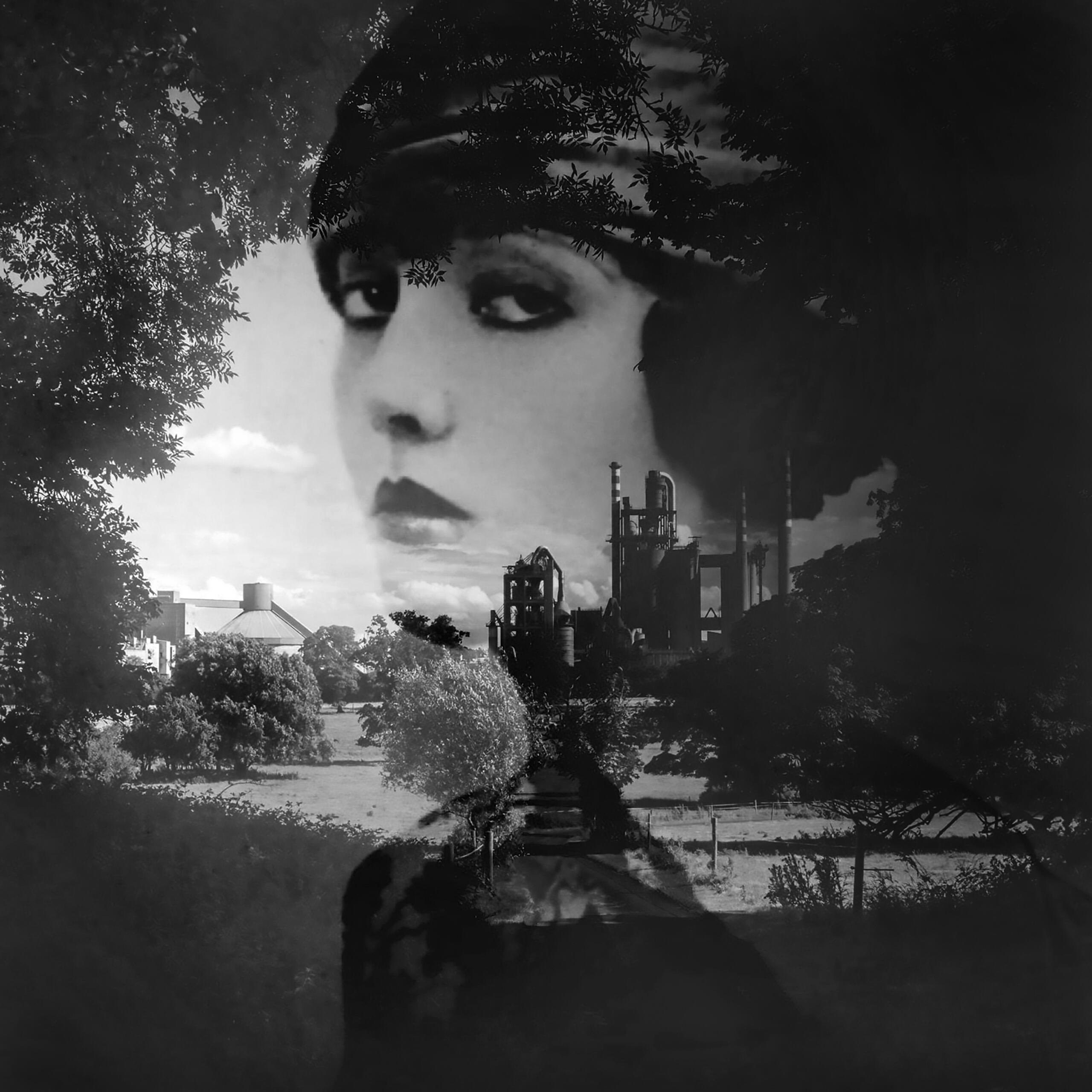
In this collection, silent film stars are placed over the landscape of the cement factory, creating a series of imaginary, dreamlike images. Their faces, once shown in flickering black-and-white, films appear here as floating figures, caught between memory and place.
These figures do not belong to the real world they appear in. Instead, they live in a parallel world, where time folds and histories mix. The industrial setting, heavy and lasting, contrasts with the film stars' identities, which were created from light, shadow and movement.
The natural arch of trees frames this merger, enclosing the scene. The result is a visual reflection on presence and absence, where the ghosts of early film culture hover over the landscape, inviting the viewer to enter a world that feels both fictional yet familiar.
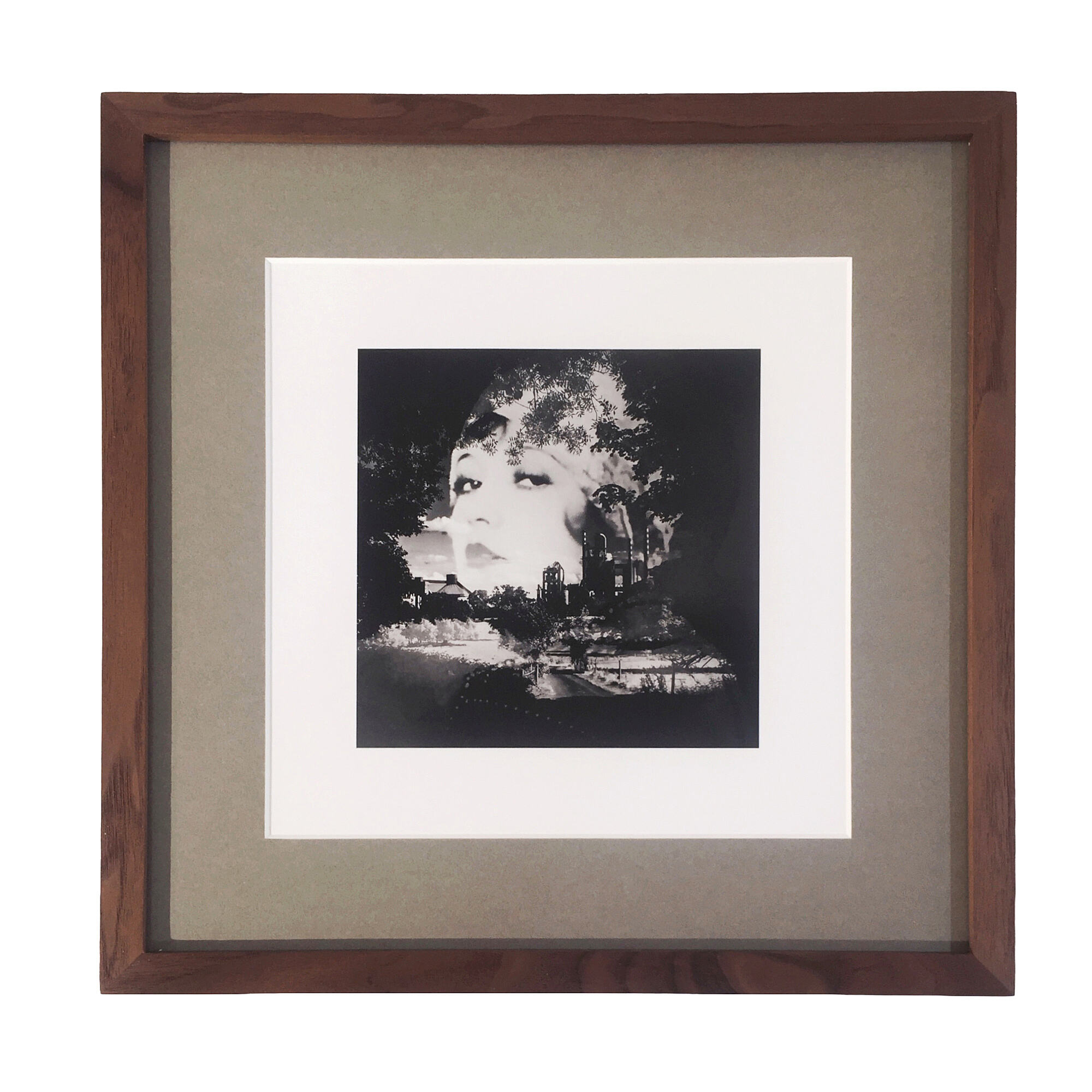
Fine art photographic prints
Each print comes in an edition of 5. Printed on matt archival bamboo paper. Size 14 cm squared. Unframed €170
Photographs available from my online shop
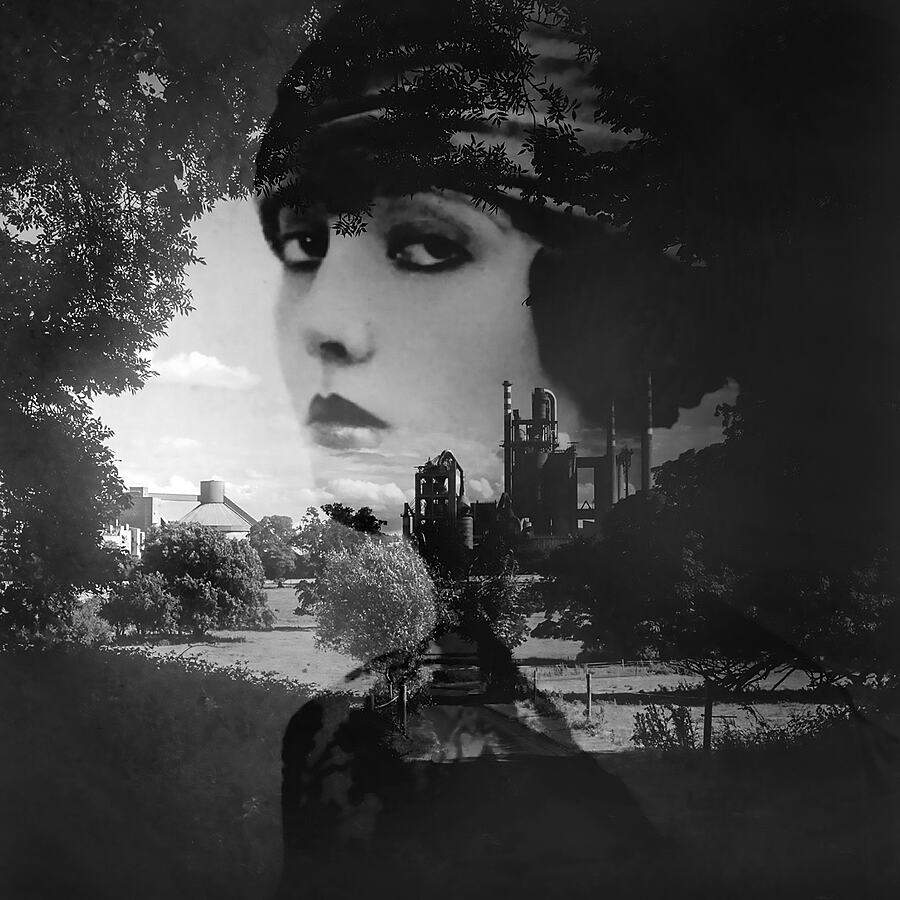
Looking back I can see it now
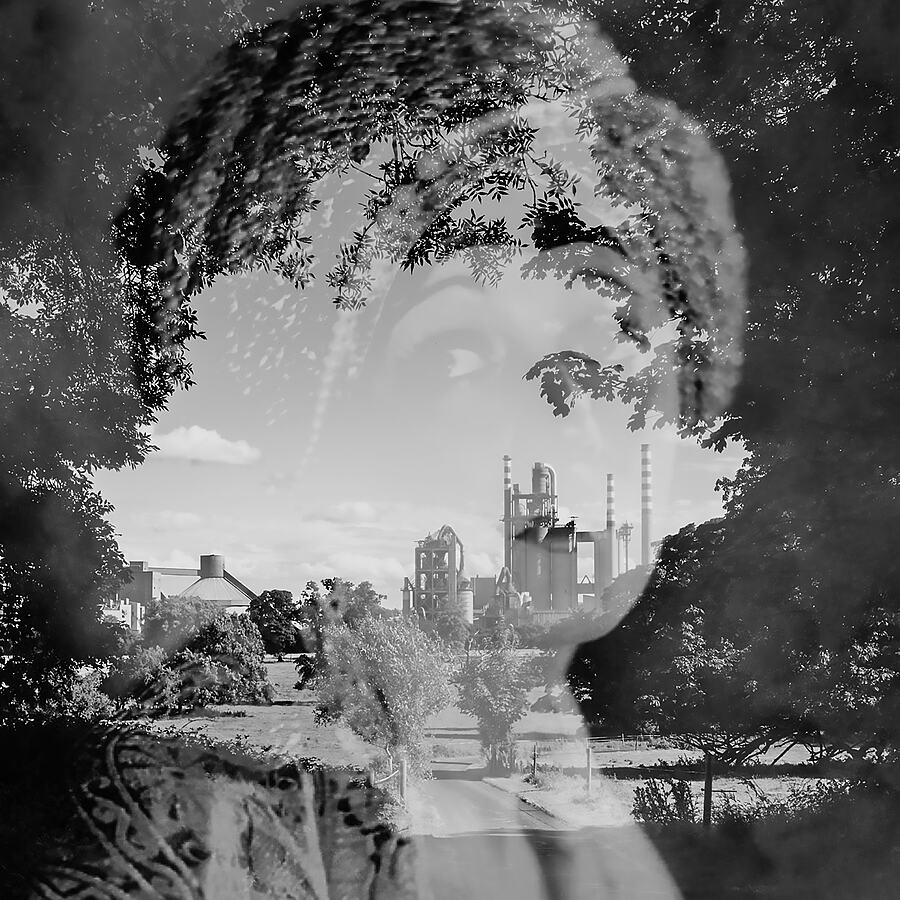
Did you not know I was here
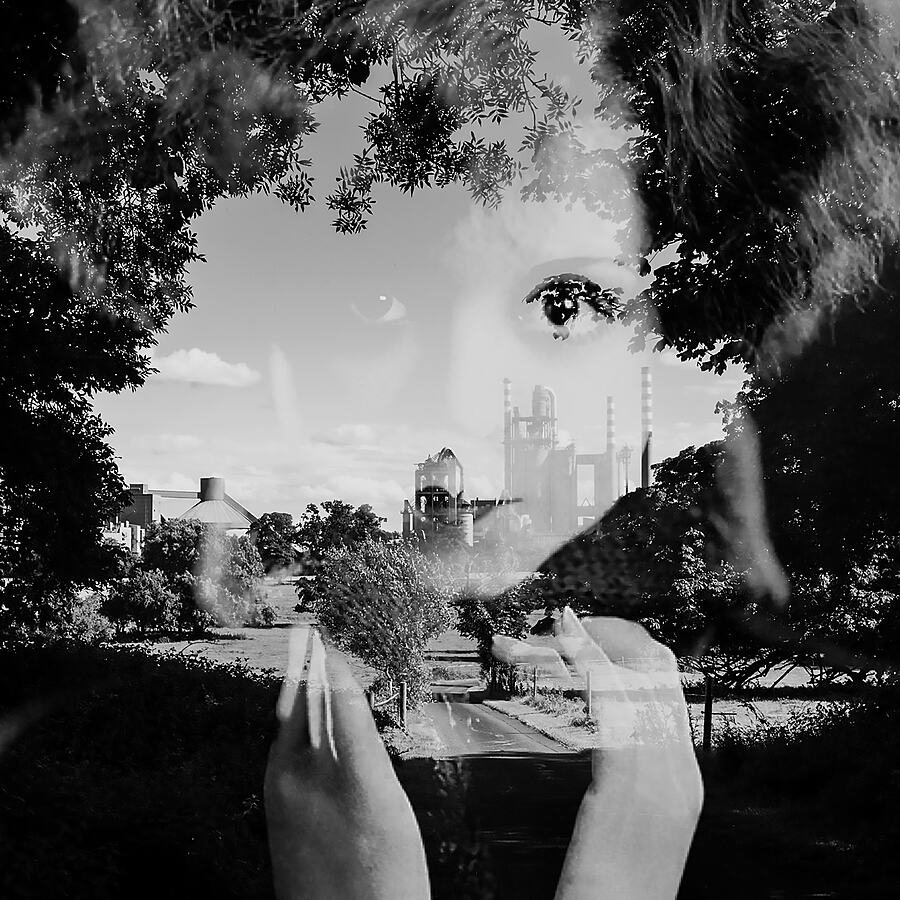
I was always there guiding you
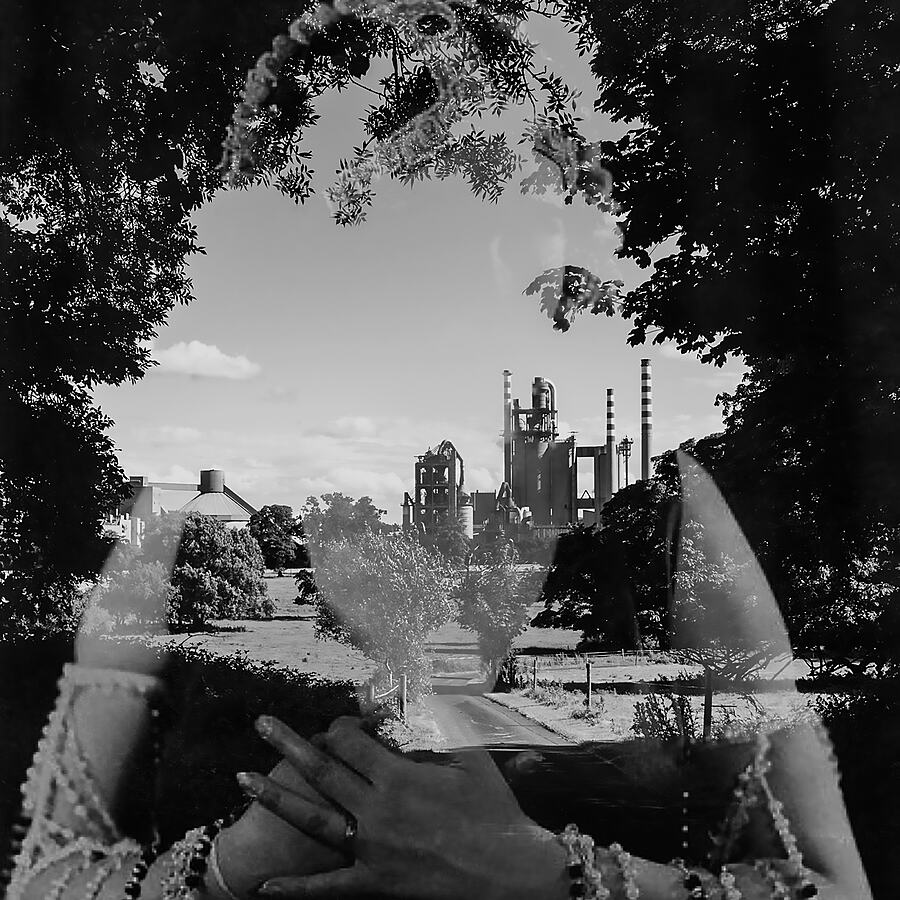
I'm wrapped around you
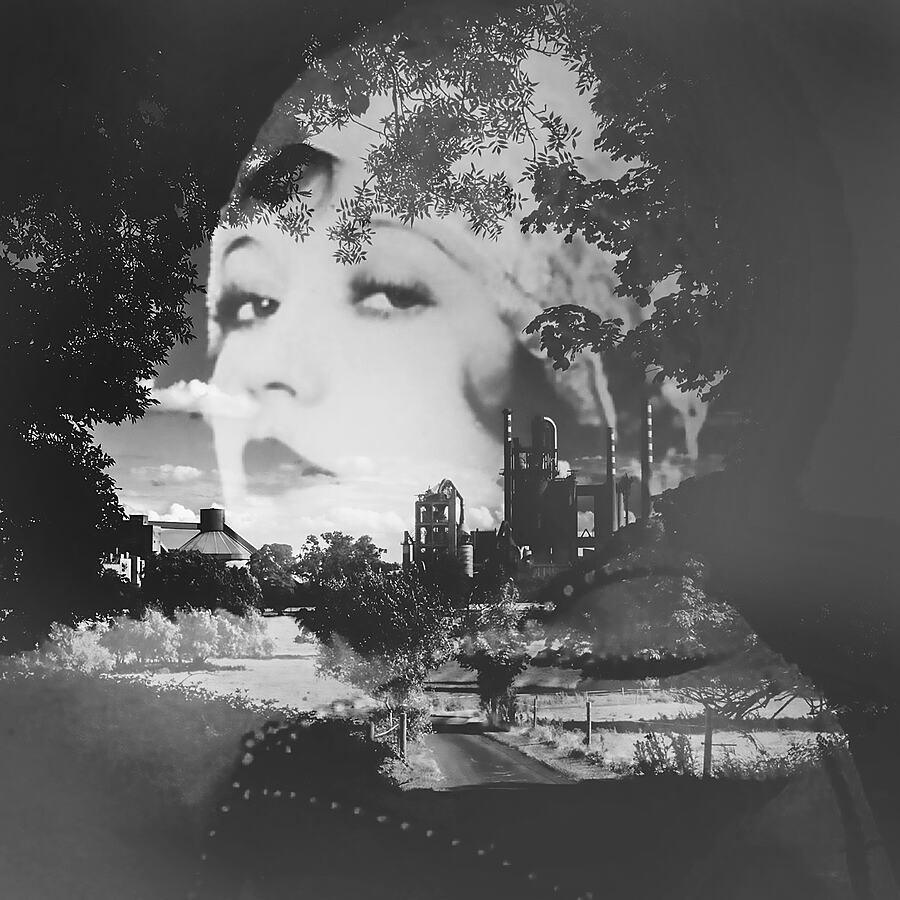
You didn't think I'd do it
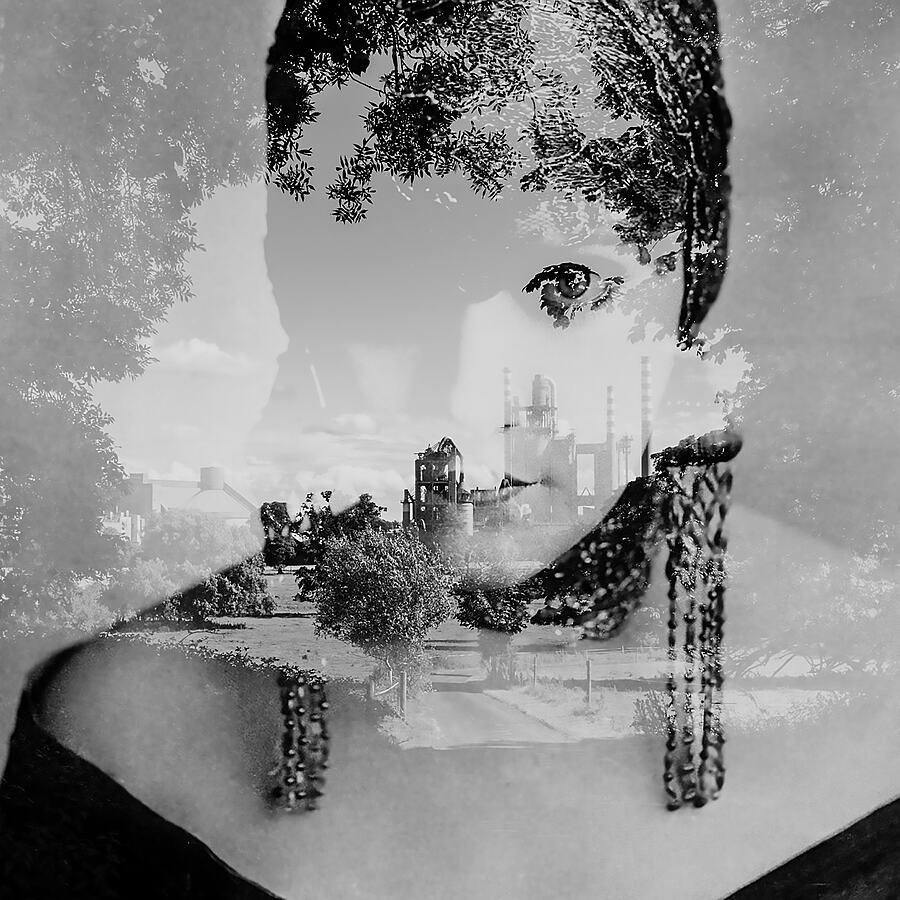
I spy with my little eye
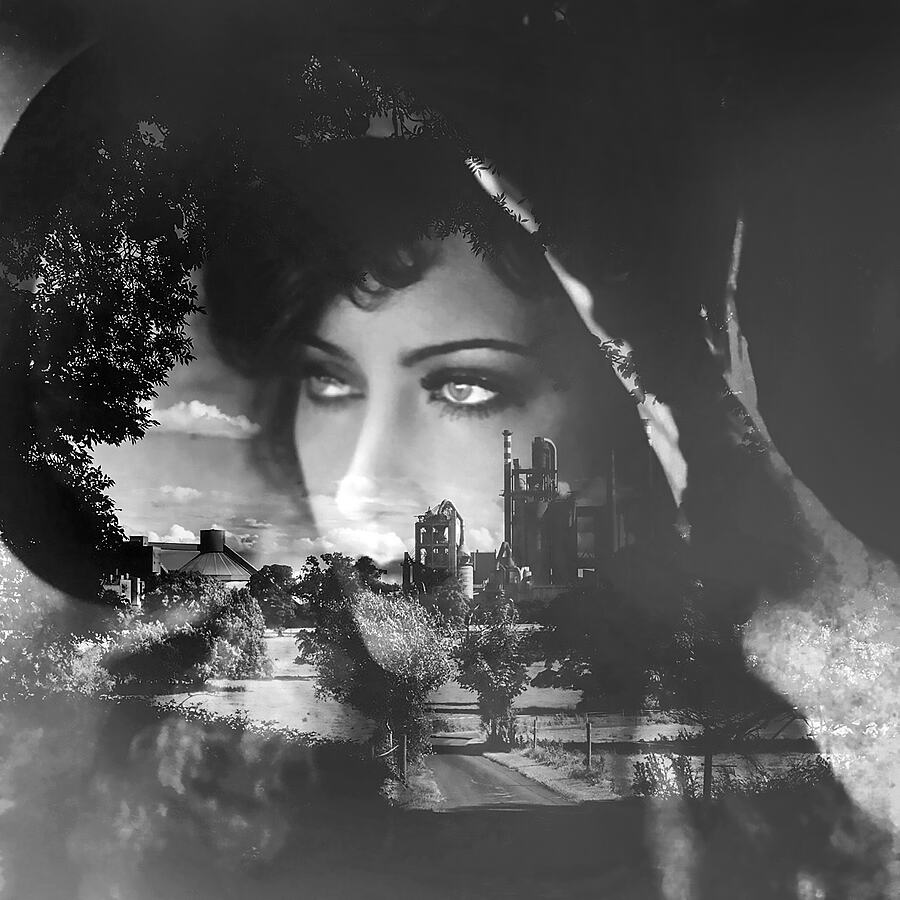
I'm always watching
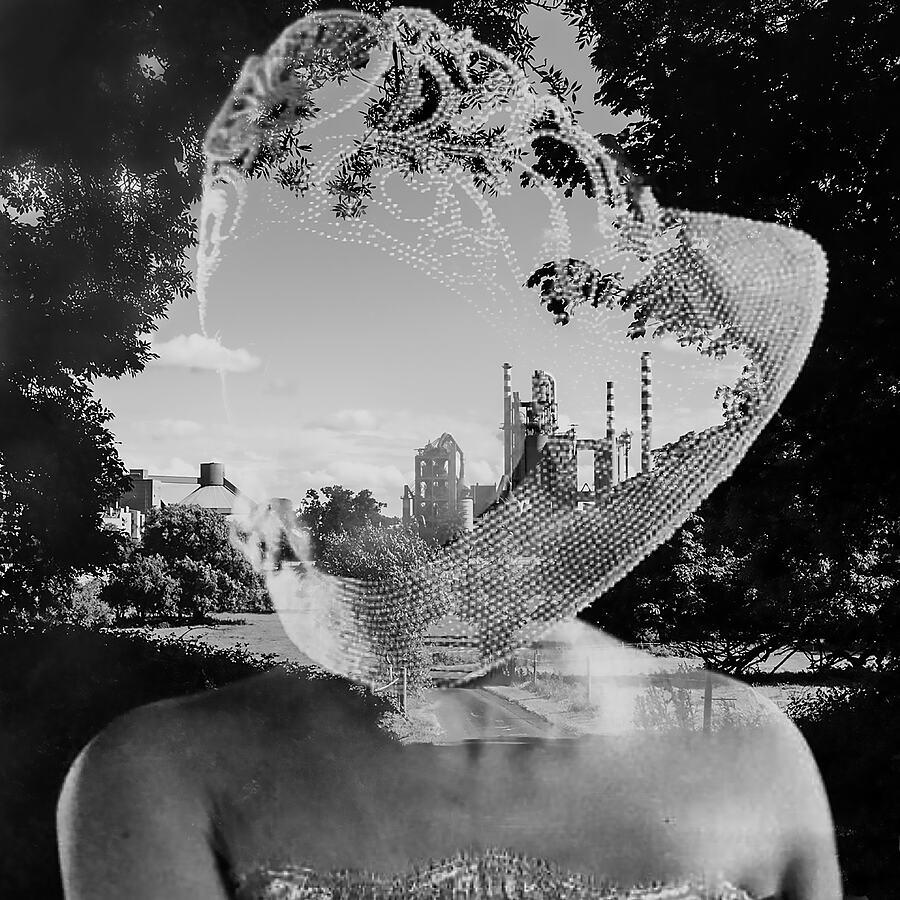
You can't make me disappear
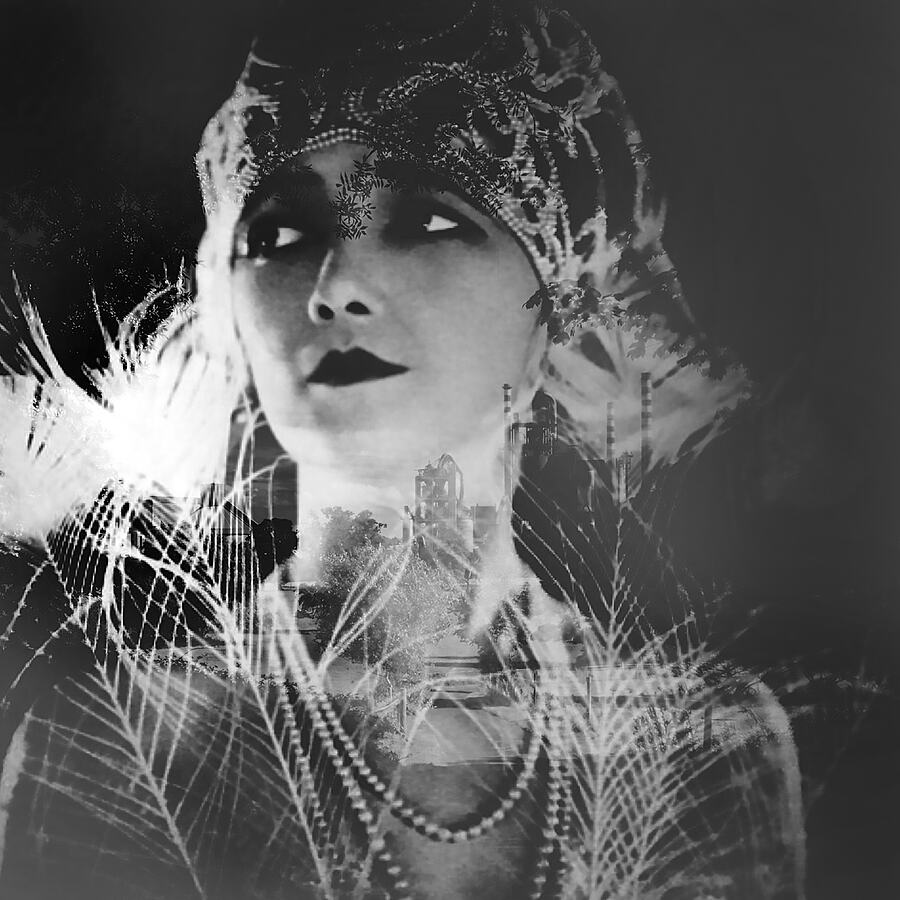
It was where I used to go
Forever influenced by Hollywood
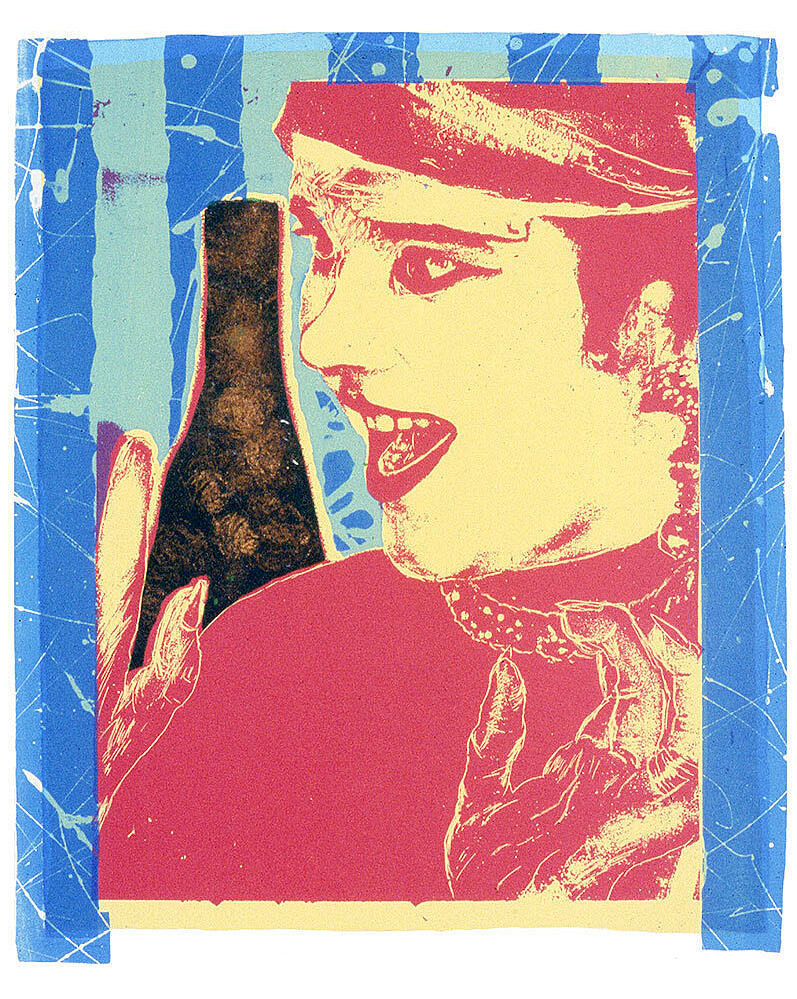
Silver Screen Betty
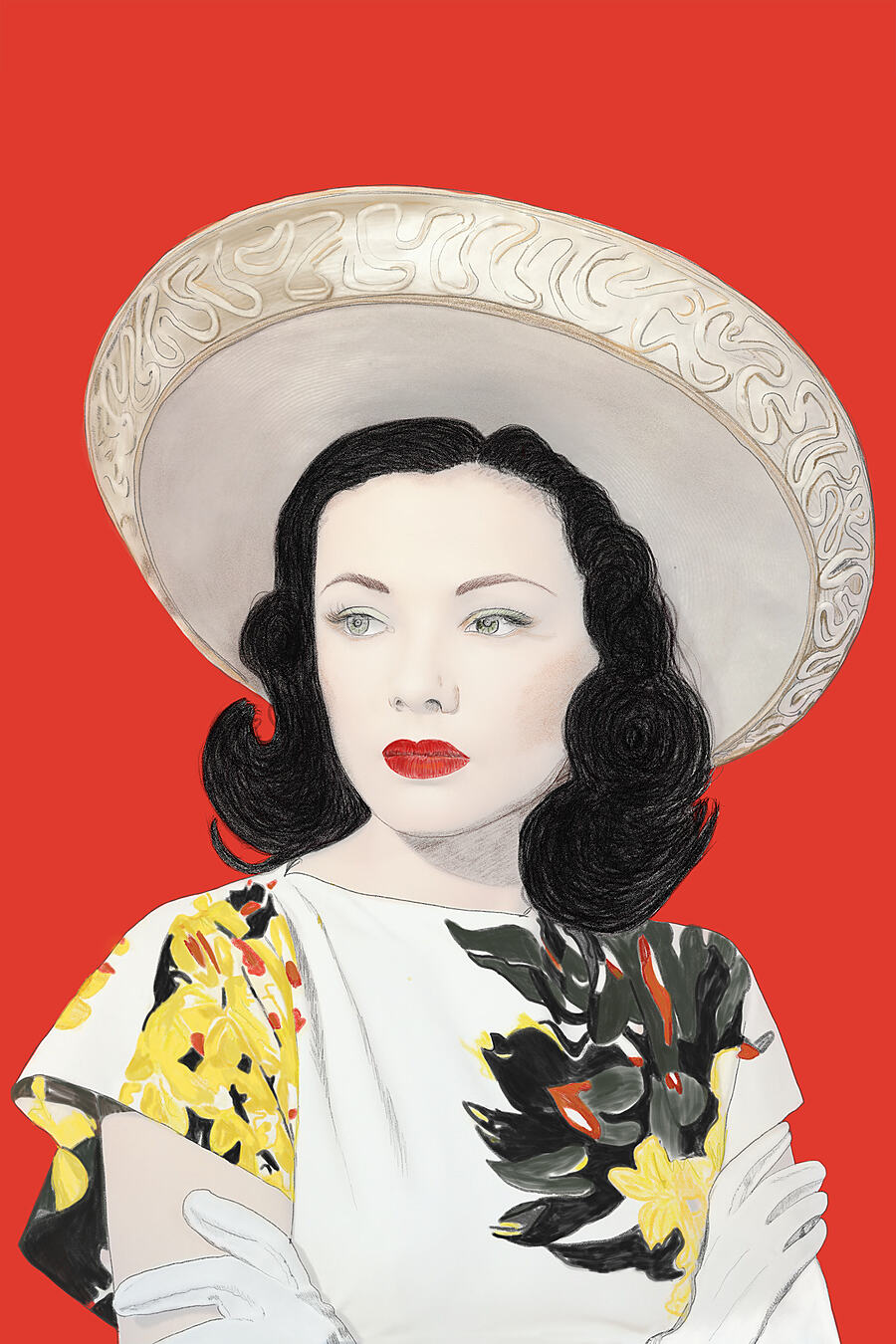
Hollywood Kodachrome